
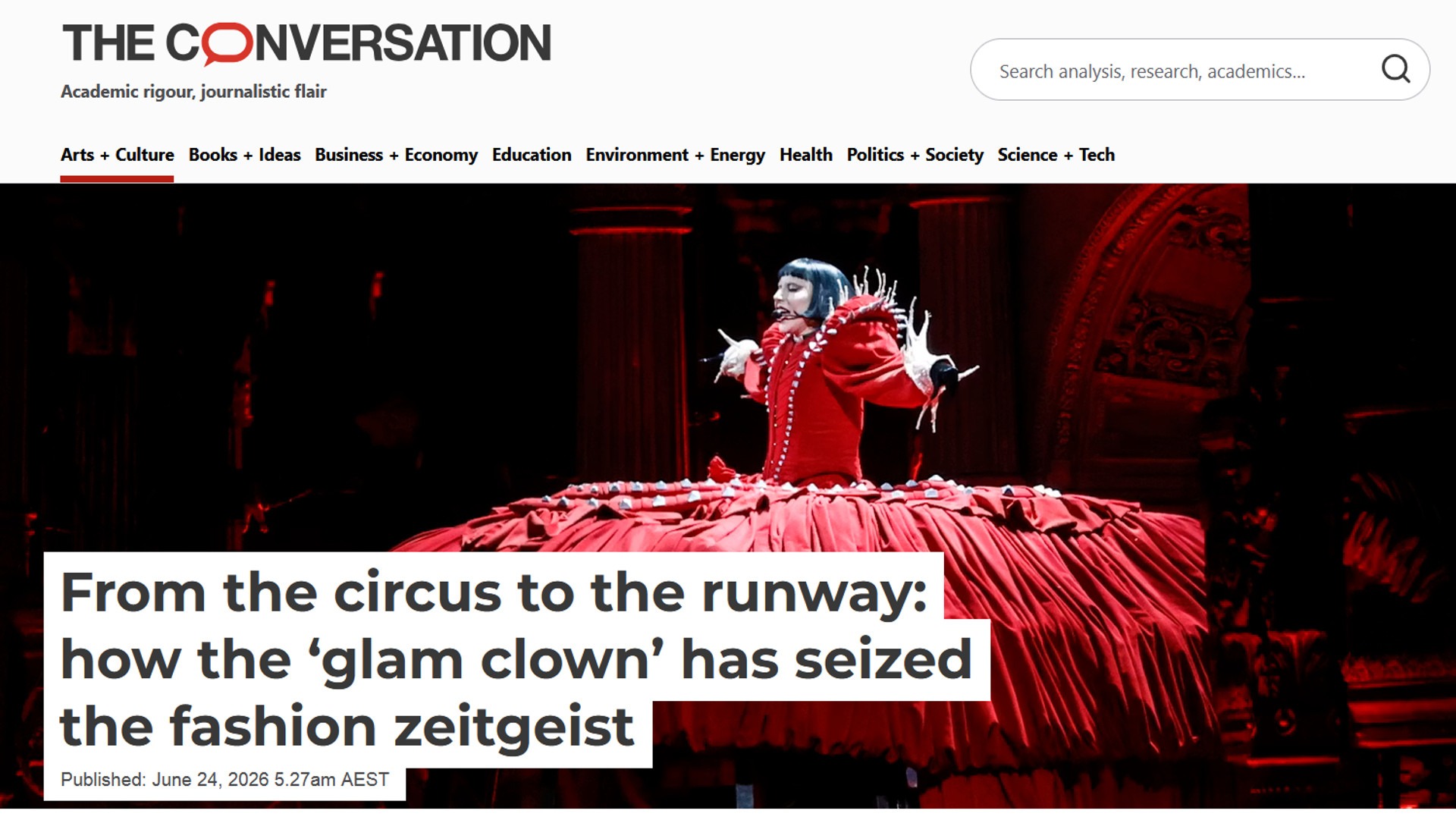
In a new article for The Conversation, based on research we co-authored and published in “Fashion, Style & Popular Culture”, Dr Dita Svelte and Dr Anna-Sophie Jürgens explore the rise of the “glam clown” in contemporary fashion. From Schiaparelli to Dior, clown aesthetics have reappeared on international runways – not simply as spectacle, but as a cultural figure through which broader social meanings are negotiated. What interests us here is what the clown reveals about cultural communication.
Cultural figures rarely stay confined to a single domain. They travel. They accumulate meanings. They are reinterpreted and redeployed in new contexts. The clown has moved from circus performance into film, visual art, fashion and political commentary, carrying with it associations of play, disruption, ambiguity and transformation.
The clown’s return to fashion is a reminder that cultural figures are never static. Similar processes shape the ‘public lives’ of scientific ideas, technologies and institutions: they do not circulate as neutral facts alone, but are embedded within stories, images and cultural frameworks that influence how they are understood. Popular culture is one of the places where such meanings are produced, reflected, challenged and envisioned. The journey of the clown from circus ring to fashion runway offers a small but revealing example of how cultural meanings travel.
Discover the research here: “The ‘glam clown’: Couture, clowning and speculative/spectacular imaginaries of fashion” – https://doi.org/10.1386/fspc_00388_1 Discover the
Conversation piece: https://theconversation.com/from-the-circus-to-the-runway-how-the-glam-clown-has-seized-the-fashion-zeitgeist-282860
#Popculture #clown #culturalmeaning
