

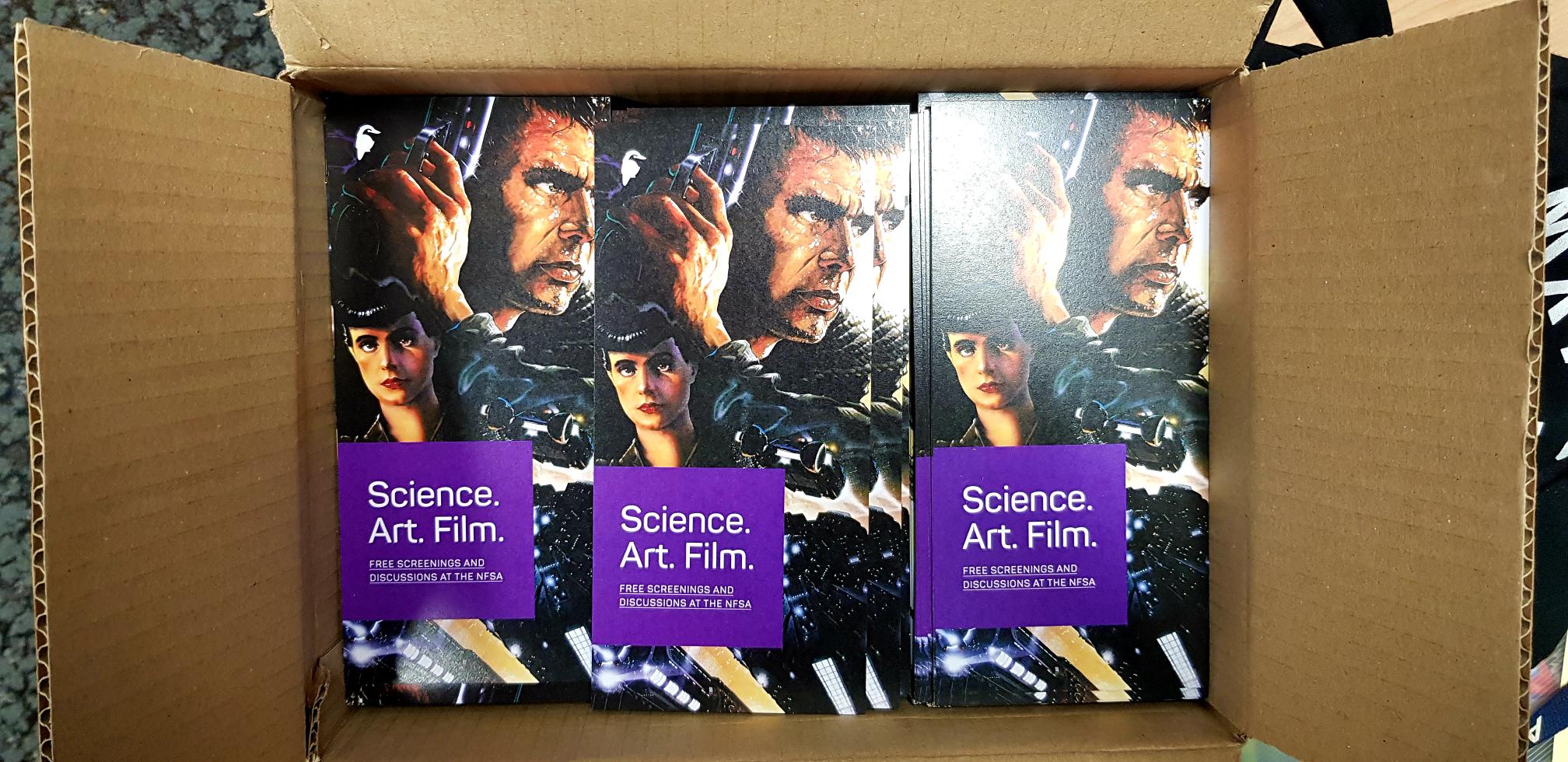
We travelled from the technological future past of Blade Runner to comic scientists in filmic comics adaptations to synthetic biology – thanks to our amazing speakers, our wonderful audiences and the fantastic team of the National Film and Sound Archive !

What is in a memory? Why do we feel emotions? How do they relate to our sense of identity, self, and responsibility? Blade Runner (1982) encourages us to reflect on how these questions on memories, emotions, and selfhood do not only define what it means to be human, but also how we relate to those who have similar capacities, including those who do not have an organic body. The film will provoke conversations on how the cognitive and emotive capacities of replicants, human-like androids with superior strength and a similar level of intelligence to humans, could influence how we perceive them and advocate for their rights and liberties. The screening will be preceded by a brief introduction on robots in popular culture and on ethical issues raised by embodied artificial intelligence. After the screening, there will be a panel discussion involving scientists and ethicists. So come, and join us in exploring the meaning of memories, and how they relate to life, love, and liberty, through this classic science fiction masterpiece.
‘A masterpiece of dystopian science fiction on film.’ – Daily Telegraph
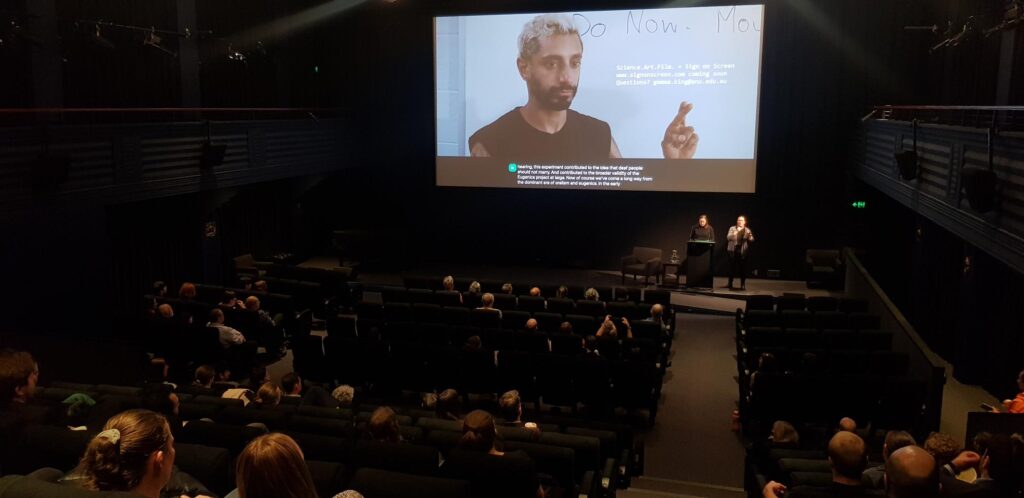
Why are so many films about deafness also about music? Why do cinema and television so often represent hearing loss as a tragedy, and cochlear implants as a magical ‘cure’ for deafness? In some ways, the 2019 American Sign Language-film Sound of Metalrepeats these patterns. In others, it subverts them, challenging hearing audiences to think differently about how deafness might impact our sense of self and our relationships with others, and how technology might intersect with them.
Join us to learn not about the “science of deafness”, which has a long and exclusionary history among hearing researchers, but about cochlear implants and the complicated place they hold in Deaf Culture, as discussed by an all-Deaf panel.
This event is a part of the Sign on Screen project, supported by the Australian Research Council at the Australian National University and the National Film and Sound Archive.
‘One of the film’s best features is its refusal to indulge in triumph-of-the-human-spirit clichés that so often weigh down disability narratives.’ –The Wrap
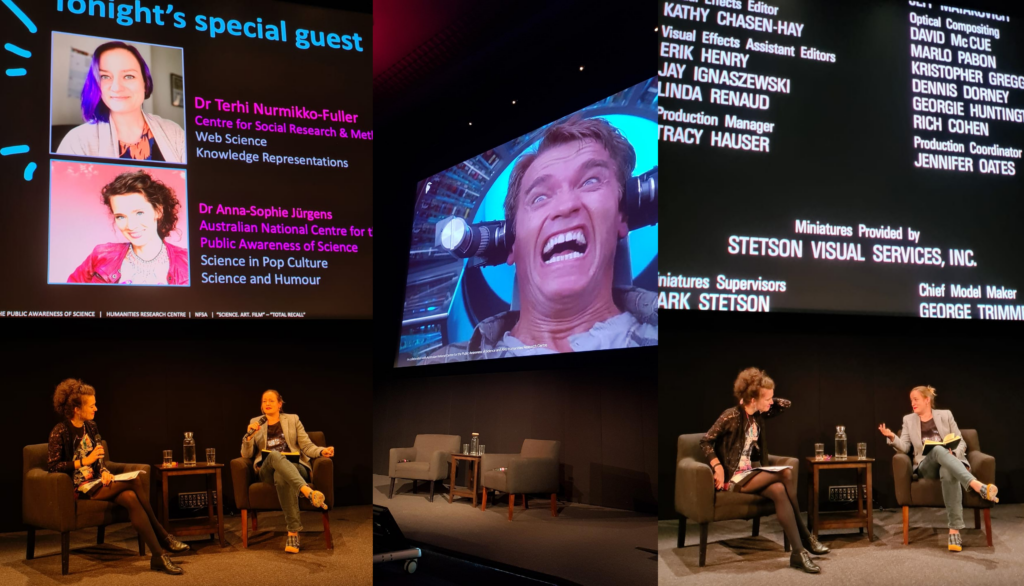
Total Recall(1990), hailed as one of the best science fiction films of all times, raises many questions about technology, including: What is real and what is fantasy in inner and outer techno-space? How can we understand this science fiction film as a place to test theories about how far we can go with the idea that technology is influenced by social pressures and desires – and to what extent are our expectations changed by the influence of technology? In what ways have science fiction motifs inspired ‘real life’ research? And why has this film actually become a cult classic? Find out about all of this and more in our panel discussion!
‘The fierce and unrelenting pace, accompanied by a tongue-in-cheek strain of humour in the roughhouse screenplay, keeps the film moving like a juggernaut.’ – Variety
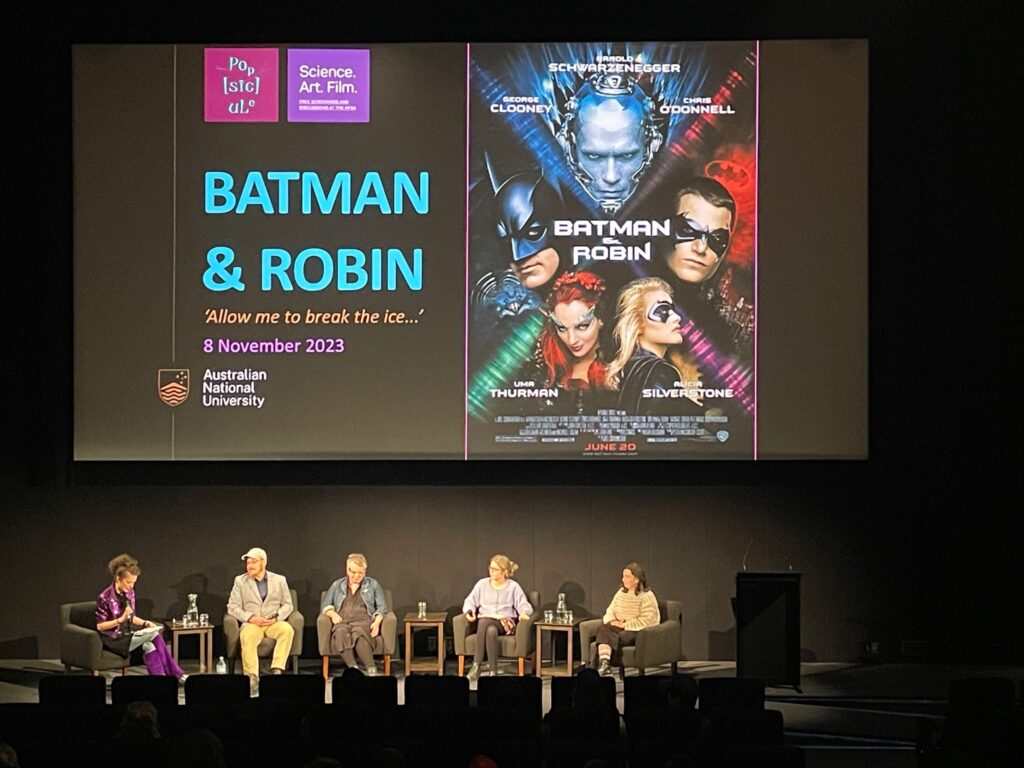
The DC universe is populated with scientists. From Harley Quinn to Swamp Thing, scientists appear as troubled and troubling vaude-villains, as suspicious Frankensteinian creature-creators and enigmatic alchemists engaging in violent delights. Joel Schumacher’s 1997 American superhero film Batman & Robin features two spectacular examples: Poison Ivy (Uma Thurman) and Mr Freeze (Arnold Schwarzenegger) – and thus science galore! This evening is not only about the biologist behind Poison Ivy and the cryogenicist behind Freeze, but also about why they are so insanely, deliciously ridiculous and (thus) worth a closer look from both a science and humour perspective. The introduction to the film will introduce you to the research on science in comics and popular film being undertaken at the ANU and take you on a journey through the mesmerising scientist narratives of the DC universe. After the screening, there will be plenty of time for your thoughts, comments and questions about the film. There is good reason to expect a wildly entertaining and amusing film night and discussion!
‘An amiable, almost farcical Batman episode, with George in Nespressso mode.’ – The Guardian
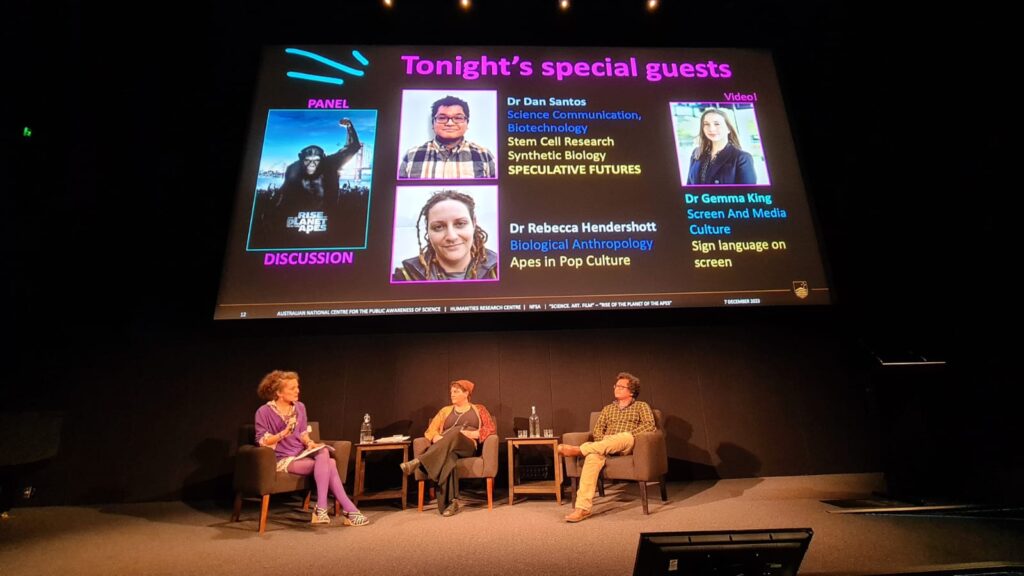
‘We gave her what we call ALZ-112, a gene therapy that allows the brain to create its own cells in order to repair itself. In biology, this is called neurogenesis. Here at GenSys, we call it a cure to Alzheimer’s.’ Cures and enhancement; natural and artificial. Modern biotechnologies are often framed as urgent solutions to pressing problems. And yet, there are always risks – of unexpected consequences and transgressed boundaries. Rise of the Planet of the Apes (2011) explores these themes and many more. It stars James Franco, Frieda Pinto and the inimitable Andy Serkis, and is the first film in a trilogy. Here, the desire to develop biomedical solutions mixes uneasily with species enhancement, and the film raises a host of troubling questions about control and order, our relations with and responsibilities to non-human species, and ultimately our place in the natural world.
‘Rise of the Planet of the Apes is spectacle with a kick: the transcendence of the normal in creatures so like ourselves is both an entertainment and a needling rebuke to human vanity’ – The New Yorker
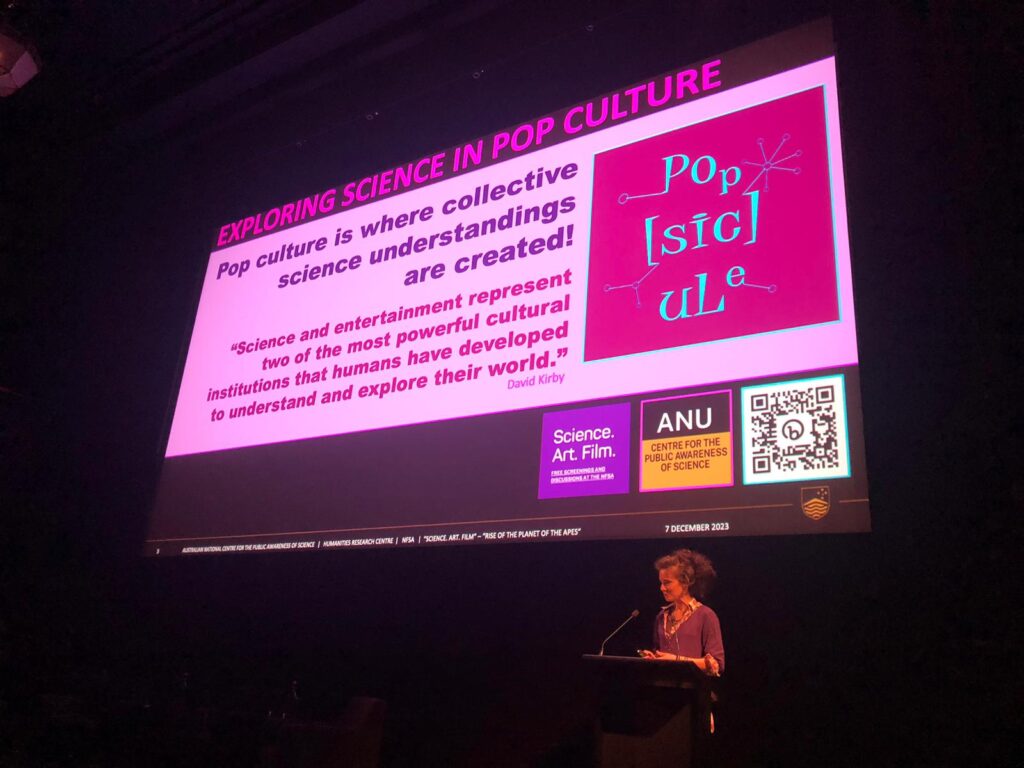
Science, art and film are among the most powerful cultural institutions we have developed to understand, shape and envision our world.
Screening monthly for FREE at Arc Cinema, SCIENCE. ART. FILM. is a new series that uncovers wacky, weird and wonderful facets of science and art in films.
Films are screened in discussion with artists and ANU scholars from different disciplines.
Presented by the National Film and Sound Archive, Australian National Centre for the Public Awareness of Science and ANU Humanities Research Centre.
