
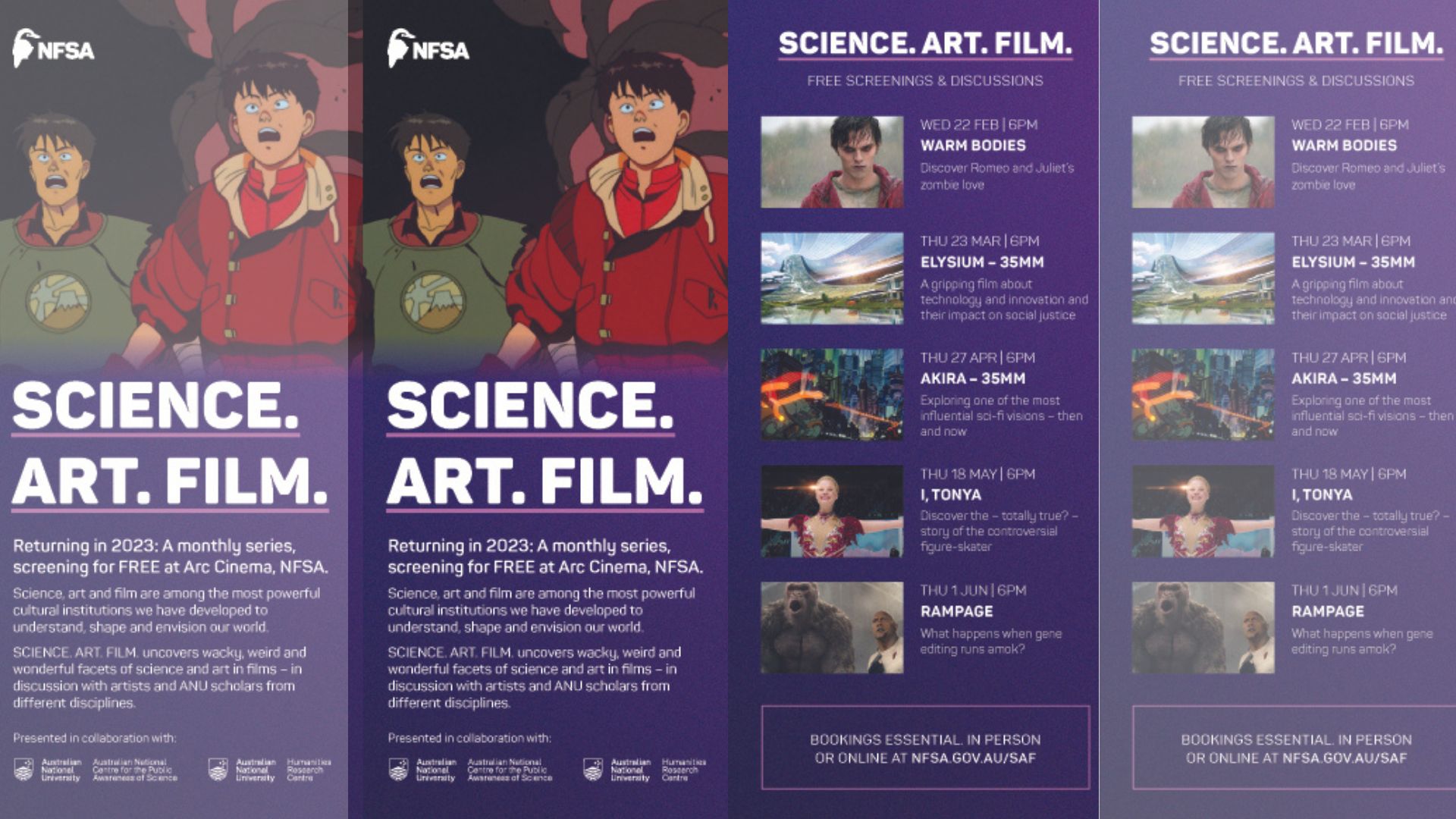
We travelled from comic zombies to responsible innovation to synthetic biology – thanks to our fantastic speakers!
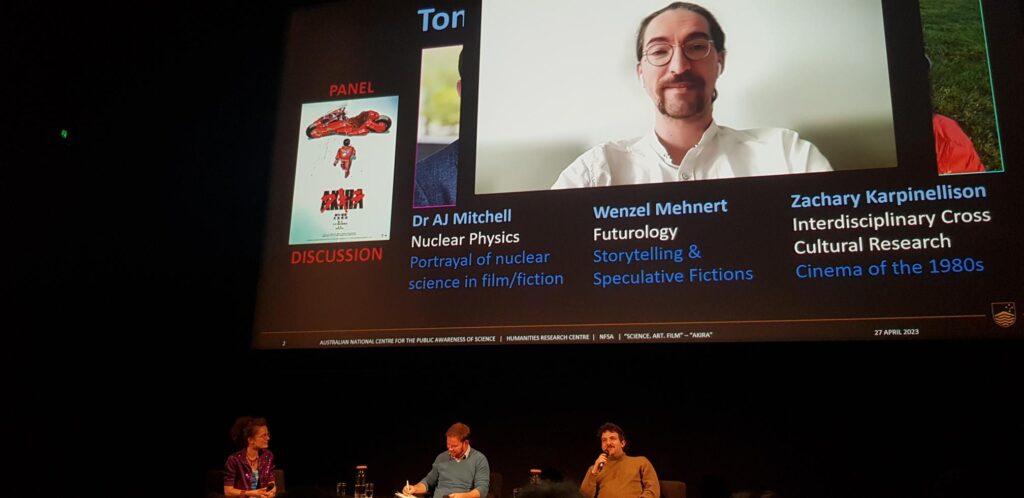
AKIRA provides unforgettable glimpses into the dystopian metropolis of Neo-Tokyo, the lives of futuristic high-speed gangs and the psychic and transcendent powers that one of the protagonists develops. The film revolves around nuclear-energy-caused telekinesis, destruction, rebirth, technological revolution – and much more.
What do technology and culture scholars today think about the kinetic energy of the iconic animated film and its vision of future technology and science?

Discover the – totally true? – story of one of the most athletic and controversial female figure-skaters in the United States, Tonya Harding, and the conspiracy regarding the 1994 attack on rival skater Nancy Kerrigan. In conversation with an expert in screendance and figureskating, this evening is about the power of female bodies on ice stages, bodily humour and identity performance. How can we capture the humour of this tragic and turbulent story of ambition – and is there such a thing as physical ice comedy? Enjoy the chill!
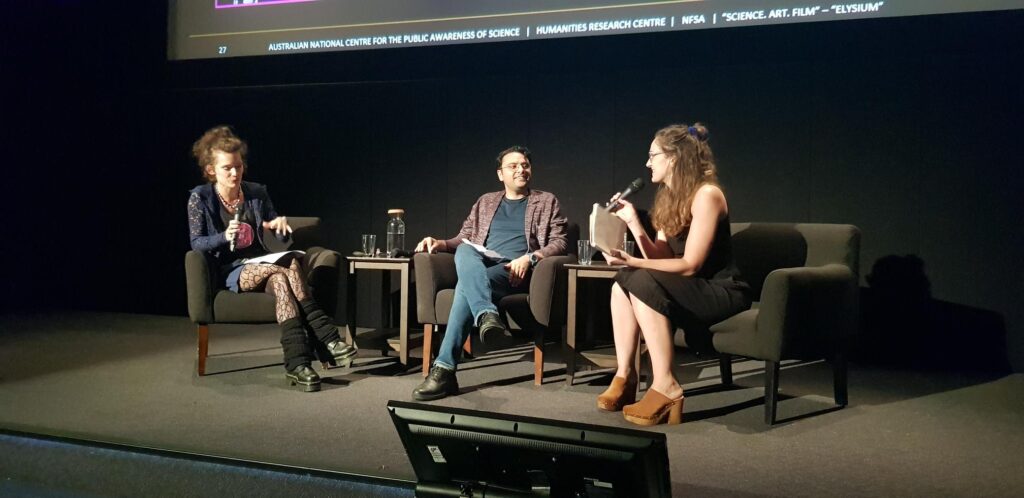
Elysium is a thought-provoking science-fiction film that explores the consequences of technology, innovation and social injustice. Set in a dystopian future where technology has created a society divided by class and wealth, the movie follows a factory worker named Max (Matt Damon) as he fights to bridge the gap between the privileged elite and the struggling masses. With powerful performances from Damon and Jodie Foster, and a story that will keep you on the edge of your seat, Elysium is a must-see for anyone interested in the impact of technology on society and the importance of responsible innovation.
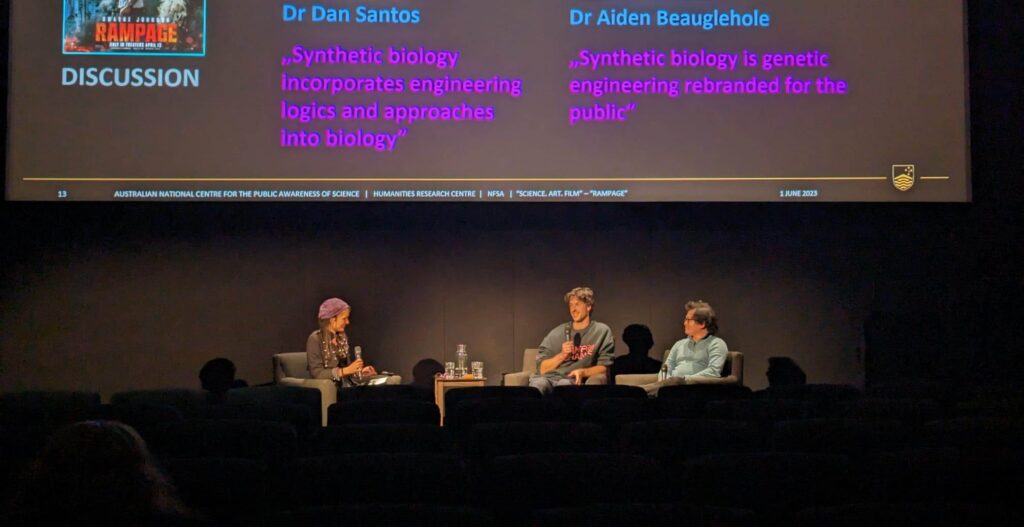
What happens when gene editing runs amok? The 2018 American sci-fi action-adventure monster movie Rampage – adapted from the video game series and starring Dwayne Johnson – offers a scenario where mutated animals destroy Chicago. Almost. The film explores contemporary advances in biotechnology – specifically around CRISPR-based gene editing and synthetic biology – and offers plenty of thought-provoking questions about the future of these newfound possibilities to engineer life. Such questions revolve around: the potential for both benefit and harm and the trade-offs involved; the role of power, property and private corporations; and the differences, if any, between biomedical and environmental applications of emerging biotechnologies.

Warm Bodies is a 2013 zombie romantic comedy film directed by Jonathan Levine and based on the 2010 novel by Isaac Marion. The film loosely traces the story of William Shakespeare’s 16th century tragedy, Romeo and Juliet – with a twist Romeo is ‘R’ (Nicholas Hoult), a quite literally) heartless zombie. On meeting Julie (Teresa Palmer) – a living human – R’s heart begins to change. The film explores adaptation and genre-mashing while also offering a unique representation of a potent symbol in western culture: the heart. Throughout the centuries, literary, cultural and medical discourse has reinforced the heart as a critical organ, a sign of life, a symbol of identity, humanity, and a means of representing the self. The heart is central to human ontology; a vital organ and a pervasive metaphor.