

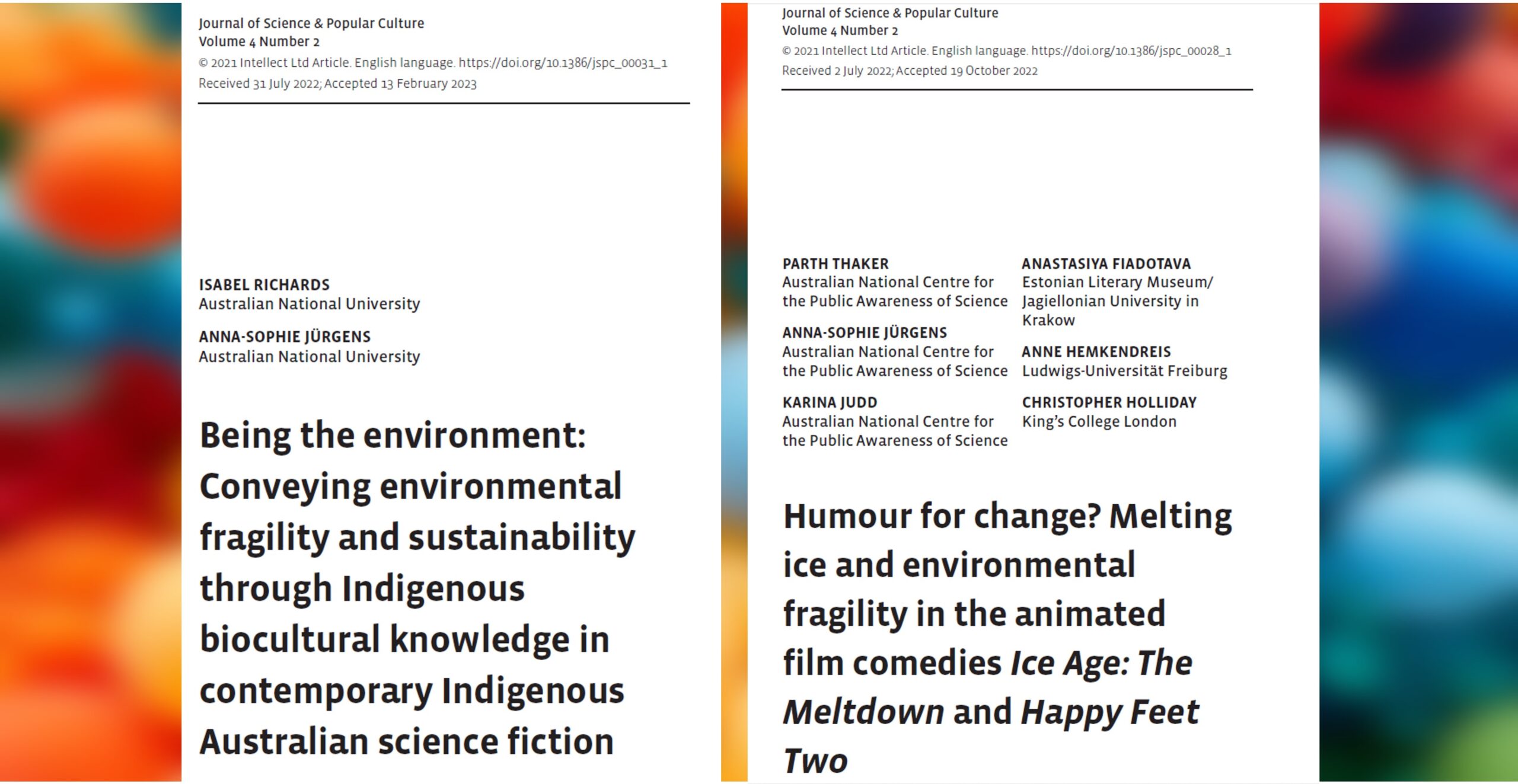
In contemporary Indigenous Australian fiction, all (non-)human animals, plants and the land are interconnected and interdependent.They are aware that they are not in the environment but are the environment. The planet and its non-human inhabitants have a creative agency and capacity for experience that demands our ethical consideration. In this article we investigate how Ambelin Kwaymullina’s Tribe novels and Ellen van Neerven’s novella Water empower environmental awareness by promoting sustainability and protection of the environment – within their fictional worlds and beyond. We argue that the human–nature relationship explored in these science fiction texts conveys the importance of Indigenous biocultural knowledge for resolving twenty-first-century global challenges. We clarify the role of fictional texts in the broader cultural debate on the power and importance of Indigenous biocultural knowledge as a complement to western (scientific) understanding and communication of environmental vulnerability and sustainability. Contemporary Indigenous Australian literature, this article shows, evokes sympathy in readers, inspires an ecocentric view of the world and thus paves the path for a sustainable transformation of society, which has been recognized as the power of fiction. Indigenous Australian fiction texts help us to rethink what it means to be human in terms of our relationship to other living beings and our responsibility to care for our planet in a holistic and intuitive way.
We are proud of the first authors of the TWO papers published in the Journal of Science & Popular Culture: Isabel Richards wrote her brilliant Honours thesis at CPAS (a while ago) and Parth Thaker took our ‘Science & Humour’ course (SCOM2006/6006), from which his writing project emerged. Both papers explore fascinating and important environmental themes in (different) cultural contexts. BRAVO!
This article explores how environmental knowledge about global warming and the melting of ice is communicated through humour in the computer-animated films Ice Age: The Meltdown (2006) and Happy Feet Two (2011) and the educational role that ecocritical narratives can play. Bringing together approaches drawn from science communication, humour and animation studies, popular entertainment studies and the environmental humanities, we argue that both films communicate environmental fragility and awareness through comedy without ridiculing the seriousness of climate change, with humour serving to highlight the representation of climate change across both fictional and real-life contexts.
